A stop list that builds more than a menu.
The same stop and rank definitions feed the visible pipework, the drawknobs and the audio engine. Drawing a stop changes which pipe voices answer a key, rather than swapping a prerecorded track.
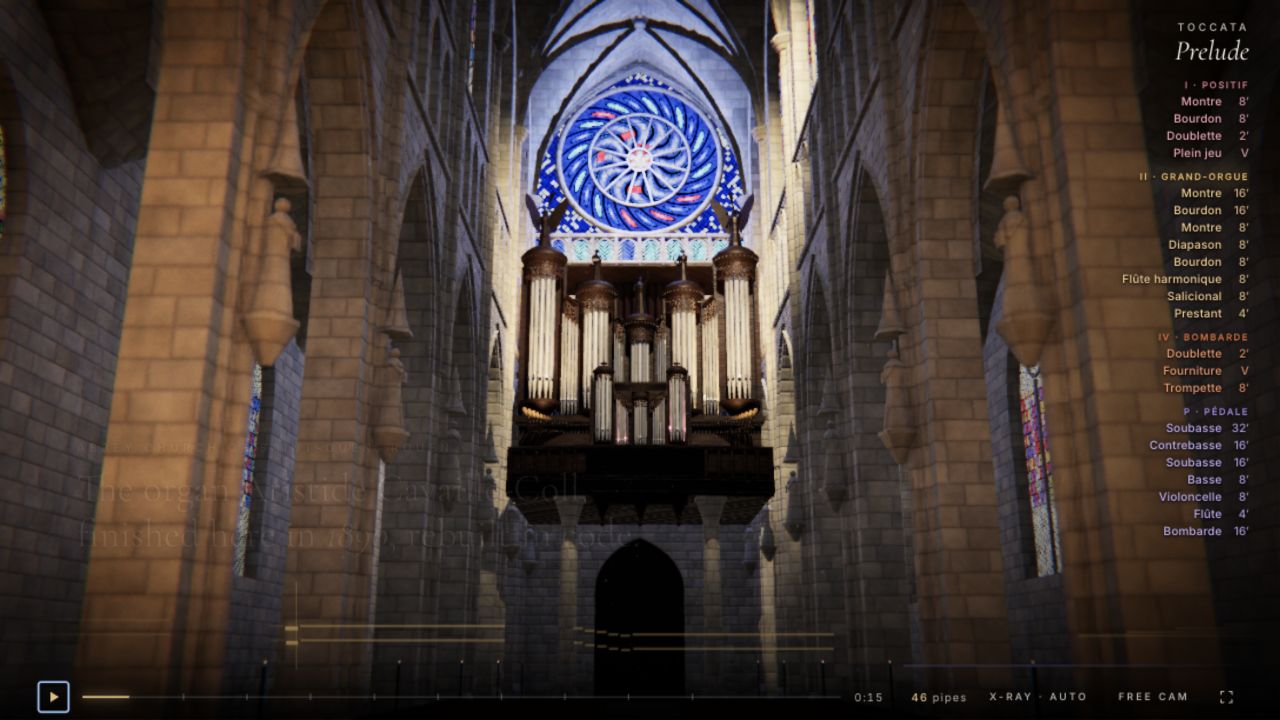 Actual browser capture
EXPERIMENT 022 / CLAUDE FABLE 5.2
Hear the pipes. See the machinery. Play the cathedral.
Plenum turns an organ into an explorable performance. The camera travels through a Gothic nave while the instrument builds from quiet foundations to a full ensemble. Its architecture, pipework and sound are generated in the browser.
Enter Plenum▶Desktop recommended · WebGL 2 + AudioWorklet · headphones or speakers
Loads Three.js from jsDelivr and typefaces from Google Fonts on launch.
Behind the experience
The interesting part is how the sound engine, pipe geometry and camera agree on what is happening.
The same stop and rank definitions feed the visible pipework, the drawknobs and the audio engine. Drawing a stop changes which pipe voices answer a key, rather than swapping a prerecorded track.
Harmonic recipes become band-limited wavetables through an inverse FFT. An AudioWorklet plays those voices with attack, chiff, breath and reed characteristics. A generated stereo impulse response supplies the long cathedral tail.
The score is scheduled against the AudioContext clock. Visual time subtracts the browser’s reported output latency, so key movement, pipe activity and the camera follow the sound instead of relying on frame counts.
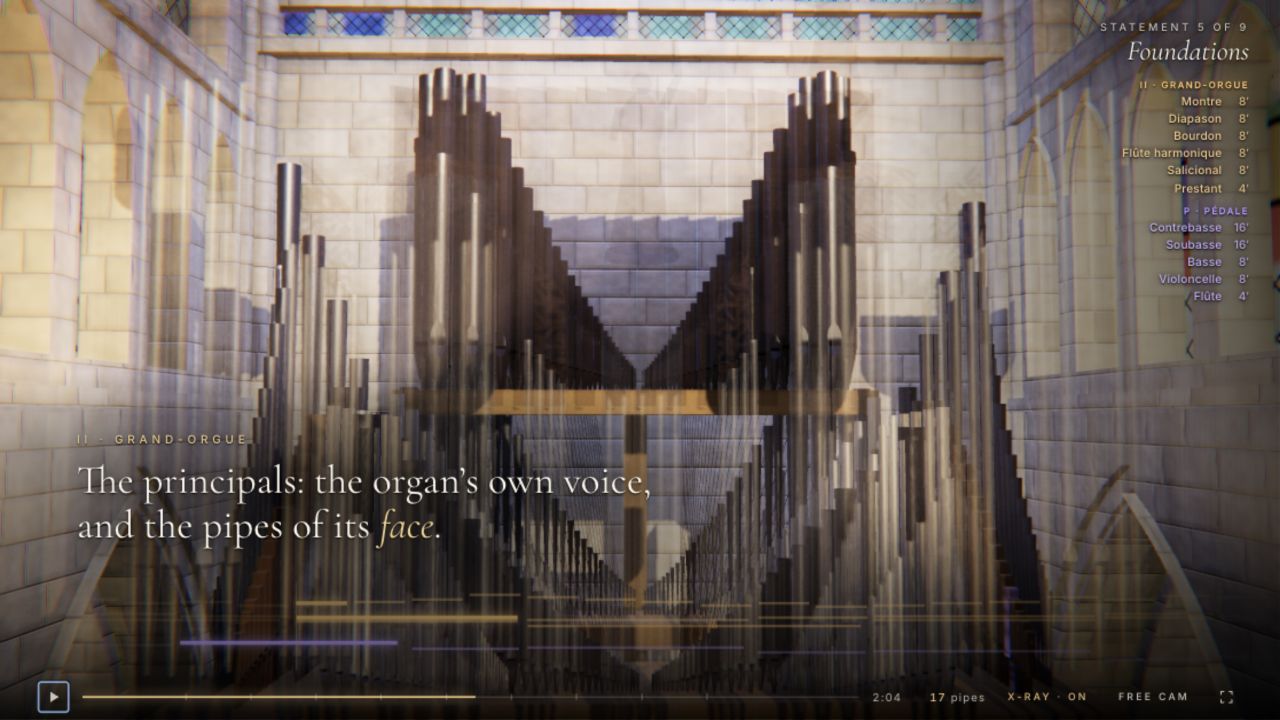
← Back to NotesThe director can reveal the inner pipework through an x-ray treatment. Solid and glass shader variants are compiled before the performance; a pixel budget and stepped render scaling help the scene cope with demanding views.
What this version is
Inspired by the Saint-Ouen organ in Rouen, this is a procedural interpretation rather than a measured acoustic replica. The score develops material from Bach’s BWV 565 and BWV 582 into a programmed prelude and passacaglia; it is not a recording of the real instrument. The original also supports MIDI in compatible browsers; use the standalone view if the embedded browser cannot grant access.
Created with Claude Fable 5.2. The instrument, cathedral, camera direction and synthesis are part of the supplied project; no recorded organ samples or imported 3D models are used.
Controls
Begin starts the performance. Space pauses or resumes; the timeline and arrow keys seek. X cycles the x-ray view and F toggles the free camera. After the performance, choose Play the organ: draw stops, choose a registration, and use the A–; keyboard row or click keys. Keys 1–5 select a manual or the pedalboard.
The return link above the player unloads the experience and its sound.