workbench/black-veil@bifteki:~$supernatural action · extended game slice
Bifteki Taxi radioMEZE RUN
Music from Bifteki Taxi Synthesized live in your browser
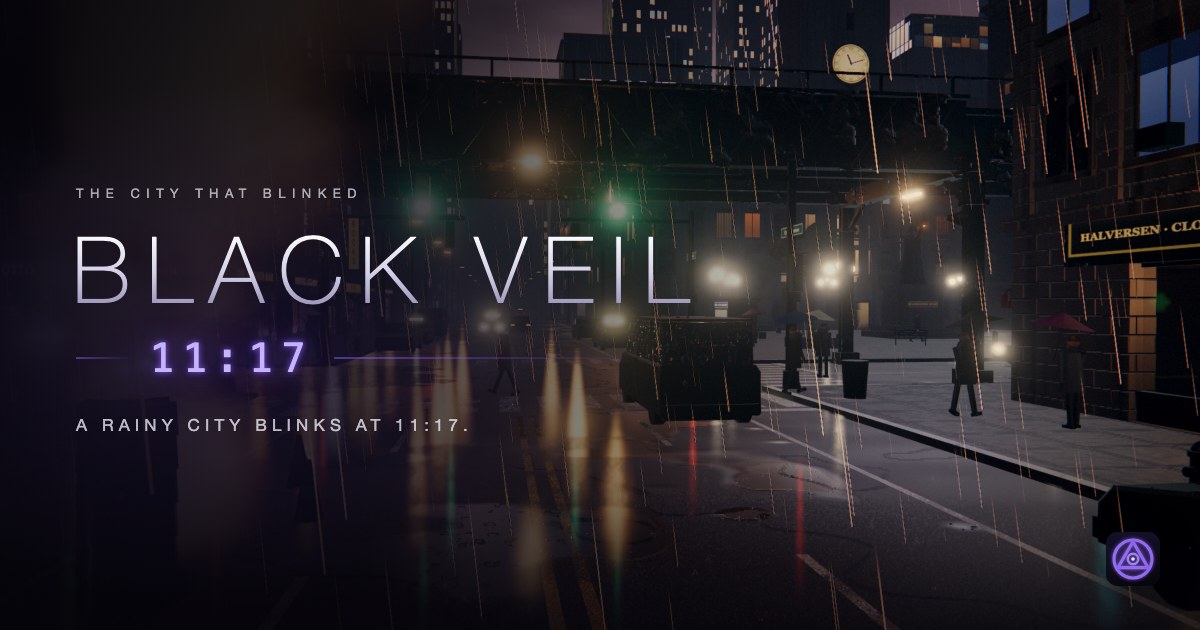
Game-rendered key art
Extended game slice · Claude Opus 5.5
Black Veil 11:17
At 11:17, the city blinks. Mika was waiting for it.
Rain on Calder Avenue. A reflection that moves wrong. Then a blackout leaves something behind. Follow the clues, become the hunter and fight your way toward the Warden of Ash—all inside the same procedural city.
Desktop · keyboard + mouse · WebGL 2 · headphones recommended. First load prepares the world and shaders. Supernatural horror, violence, flashing lights and sudden sounds. Reduced-flash and camera-shake settings are available.
30+ hoursDevelopment with Claude, followed by several adjustments—not a one-shot result
One continuous worldOpening → investigation → transformation → combat → boss
Three difficulty tiersStory, Hunter and Veilborn
Generated in codeCity, characters, effects and score
Behind the experience
The spectacle has to survive becoming a game.
A striking shot is only the start. Here the camera must give control back, the combat must keep its timing, and the same city has to carry both the story and the fight.
01 / Cinematics & state
Skip the shot. Keep its consequences.
The opening, transformations and encounters share one scene, one player and one physics world. Cinematic timelines commit the state changes needed for the next playable moment even when skipped. Otherwise a missing story beat can become a missing enemy, a locked clue or the wrong version of Mika.
The simulation advances in fixed 1/60-second steps. A separate action clock freezes combat and movement during hit-stop while presentation has its own timing. Parry windows, posture breaks and attack recovery belong to the combat system; the camera, sound and effects react to its events.
03 / The wet city
Reflections do not all tell the truth.
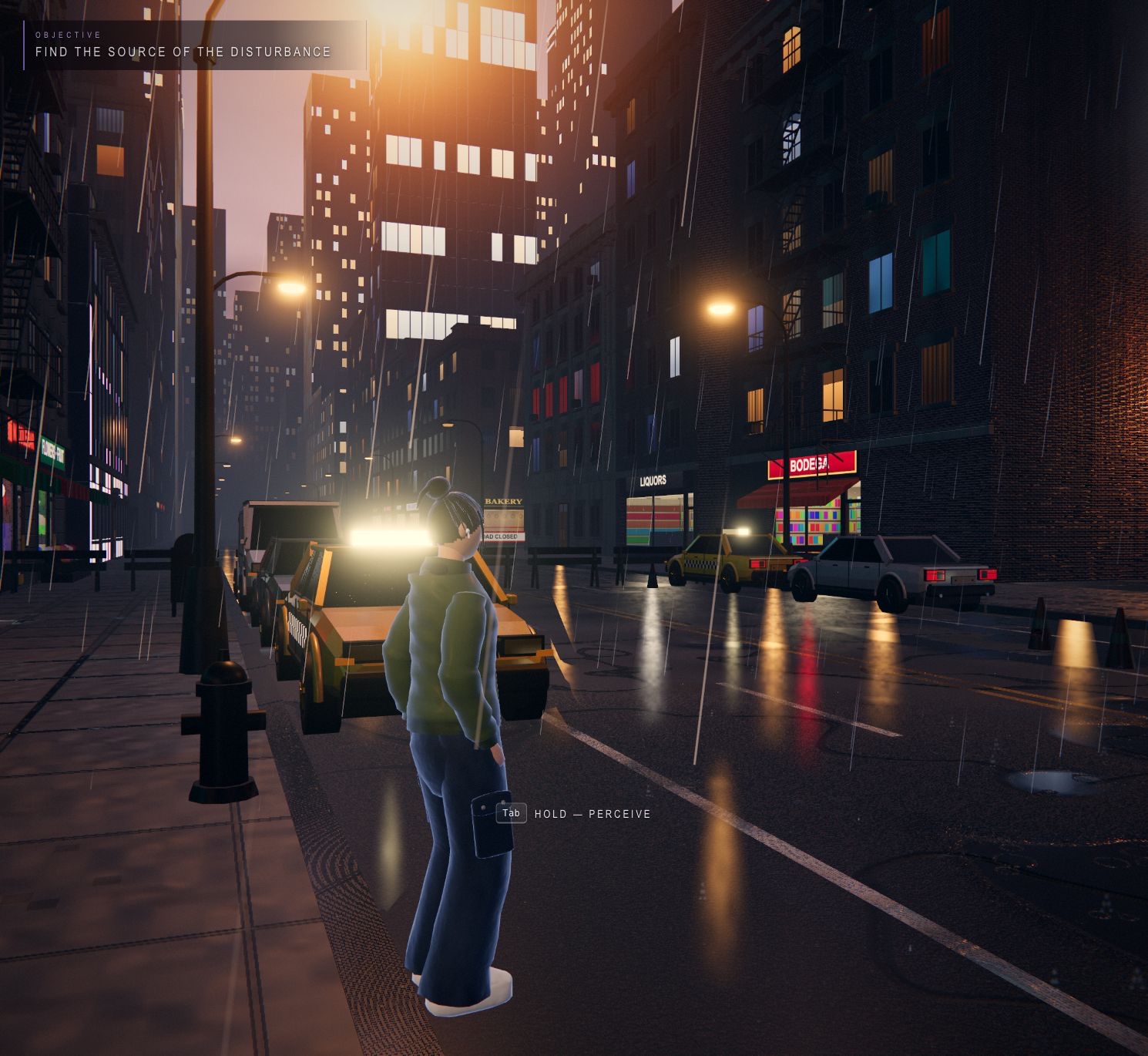
Procedural wet-street materials, puddles, rain and analytic light streaks make the avenue glow. A captured environment probe supplies reflections; the suspicious shop-window reflection is an authored actor, not a second fully mirrored world. It can move wrong because the story needs it to.
04 / Characters & animation
Build the body. Then make the feet believe it.
The shipped characters use procedural skinned rigs and authored animation clips, with foot locking and secondary spring motion. Their movement must agree with attack timing and the player capsule. It is a stylized cast, built without shipping external character models.
05 / Sound & tension
Let the fight conduct the score.
The Web Audio engine synthesizes ambience, music and combat cues. Separate buses let the player balance music and effects, while the music director follows the current state of the journey. The score responds to the game rather than playing as a single background recording.
06 / Player control
Give people ways back in.
Checkpoint continuation, encounter restarts, skippable cinematics and three difficulty tiers make a longer slice easier to revisit. Reduced flashes, shake reduction and readable clue feedback matter just as much as the dramatic opening.
Actual browser capture · the same district carries the cinematic and playable investigation.
What this version is
A substantial slice. Still an evolving prototype.
This is a work in progress, not a finished commercial game. The characters are deliberately procedural and stylized; presentation and balance are still being refined. Desktop keyboard and mouse are the intended setup, with Low, Medium and High graphics options. Gamepad support exists, but we have not checked physical controllers here. Mobile and touch play are not supported.
From design document to game slice
This began with a longer, detailed design document covering the city, story, combat, cinematics and implementation requirements. Development with Claude Opus 5.5 ran for more than 30 hours, followed by several rounds of adjustments. The result reflects that sustained development and refinement—not a single prompt or an equal-effort comparison with the shorter experiments.
Controls
Investigate first. Learn the timing.
WASD moves; mouse or arrow keys control the camera. Shift sprints, Space dodges, left/right mouse attack, Q parries, E guards and R heals. F inspects or interacts; hold Tab for hunter perception. Esc pauses and releases the mouse. The in-game Controls page explains combat combinations. Hold Enter or Space to skip a cinematic. Settings and a checkpoint are saved in this browser only; clearing site storage removes them.
The return link above the player unloads the experience and its sound.