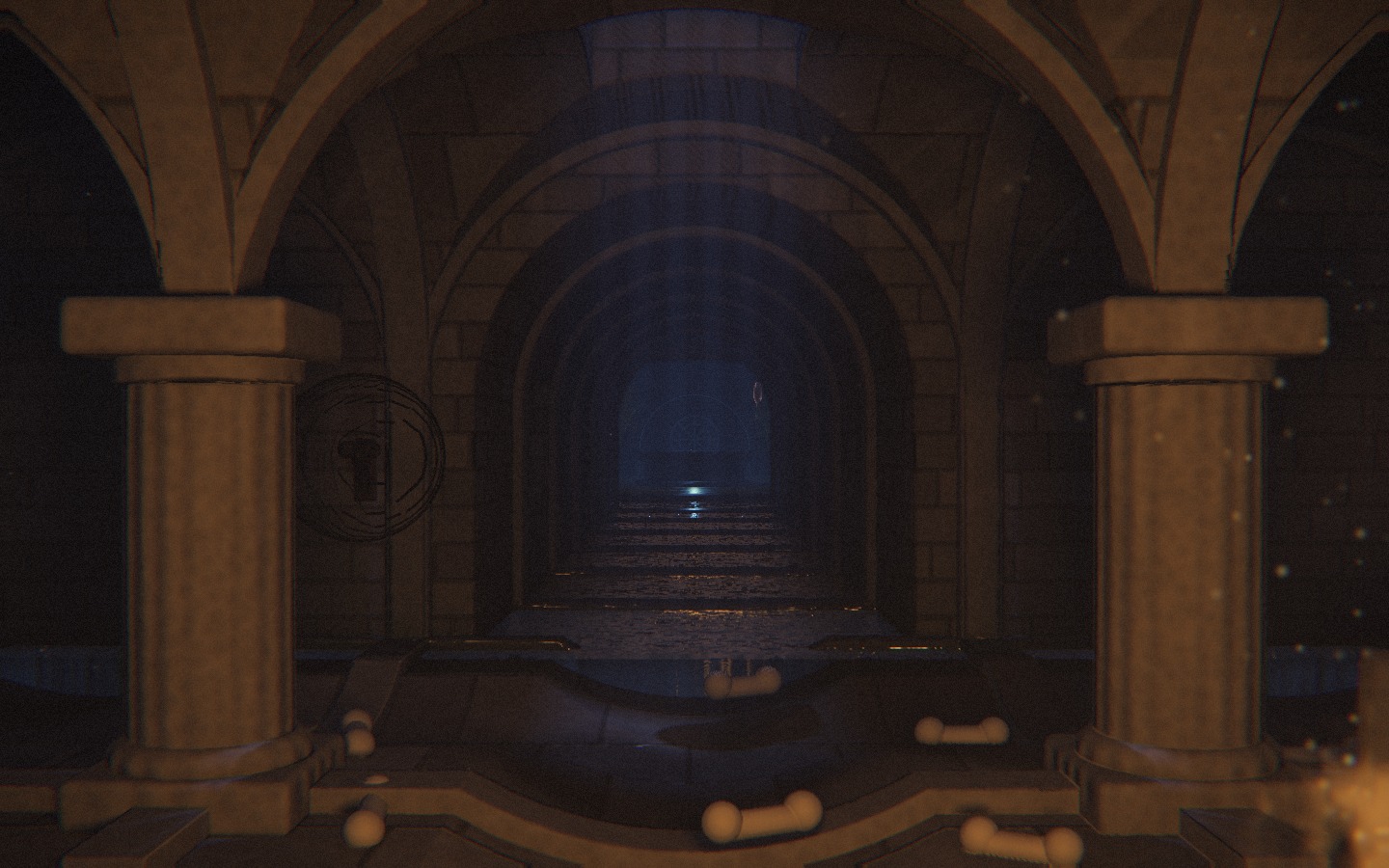
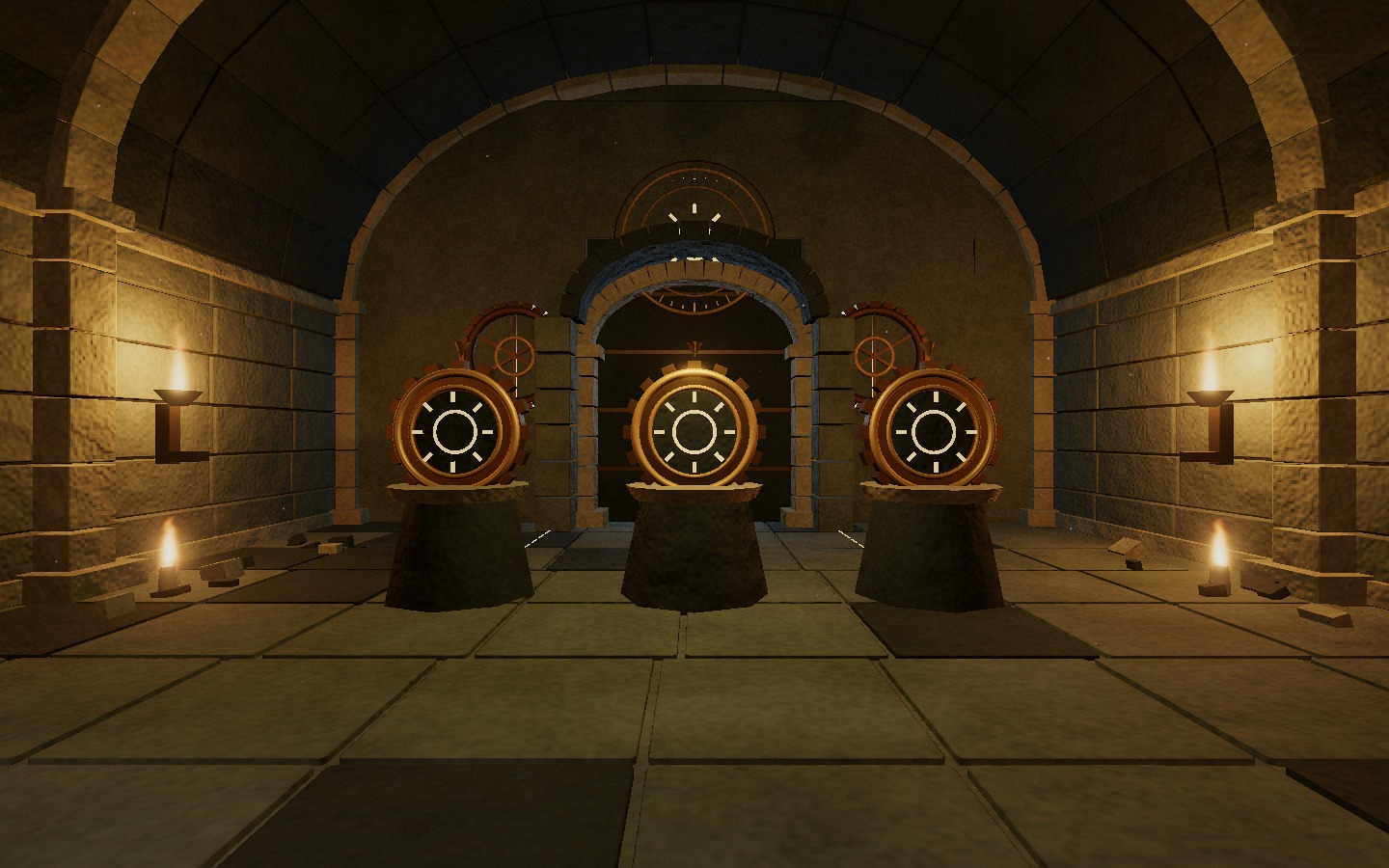
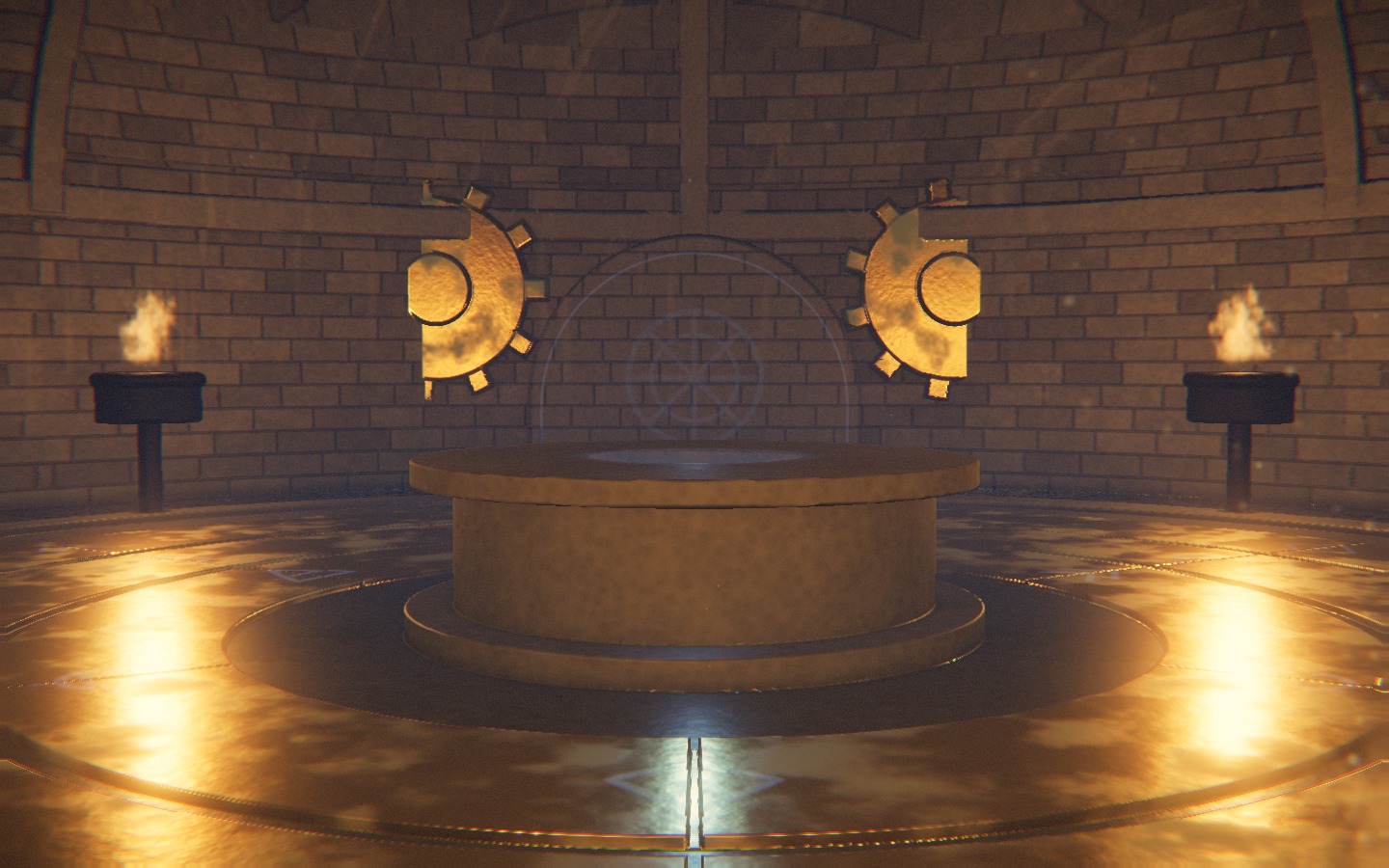
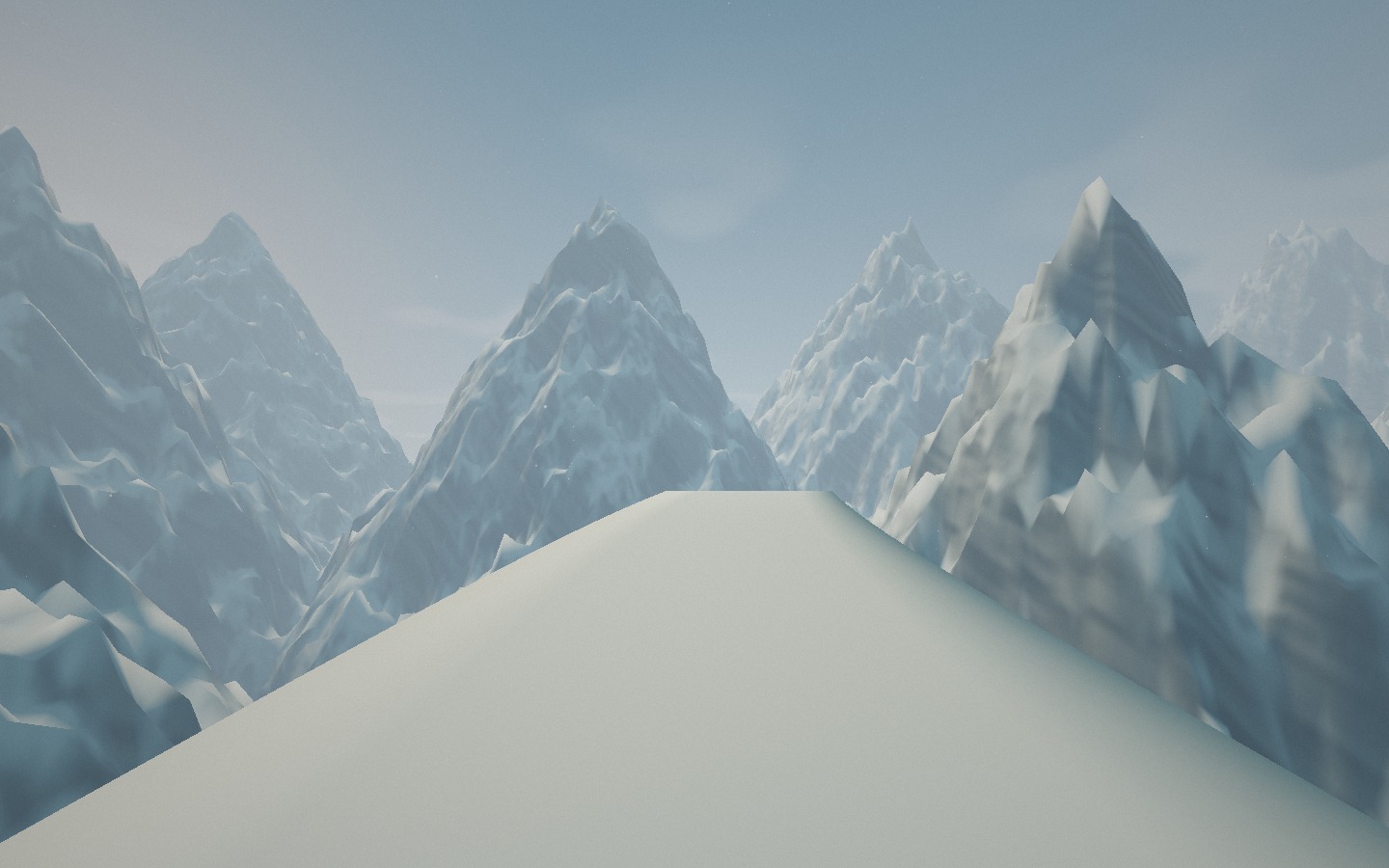
A green-lit crypt, readable tablets and a rune mechanism. Free exploration in the passages gives way to staged puzzle and mountain scenes.
Raw WebGL 2 · React-led chapters
Two substantive control/puzzle corrections, then small settings changes. Much less refinement.
Implementation notes
Three meanings of “a procedural world.”
All three generate the game’s visuals and sound in the browser. That constraint still leaves a remarkable amount of architectural freedom.
Source-level comparison · no normalized performance measurements
System
ChatGPT 6 Astra
Opus 5
ChatGPT 5.6 Sol
World construction
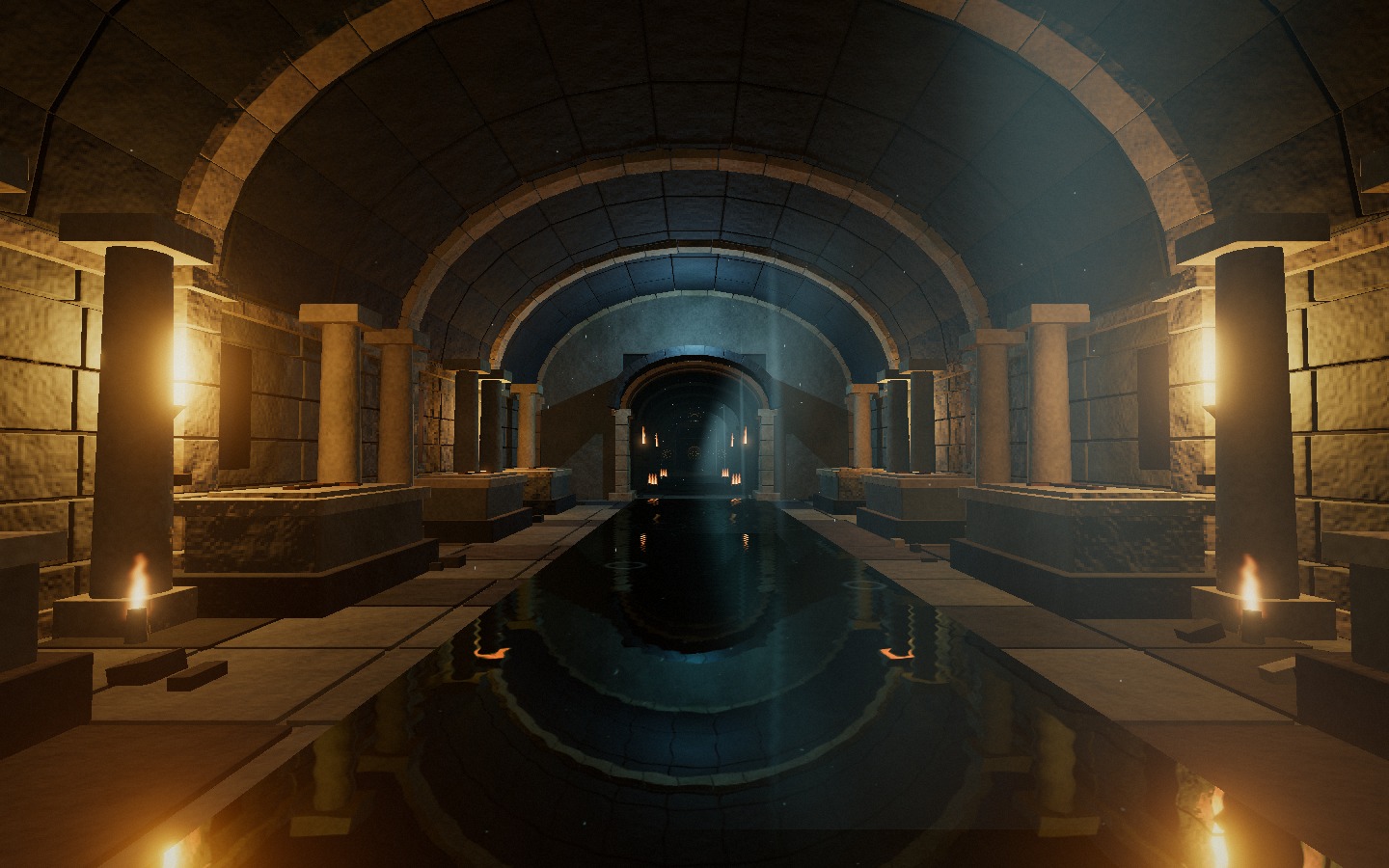
Three.js meshes: extruded crypt shells, instanced details, a generated ridge and mountain terrain.
Signed-distance fields carve the crypt. A separate raymarched heightfield builds the exterior.
A fullscreen WebGL shader raymarches the crypt. React selects the chapter and interaction overlays.
The mountain reveal
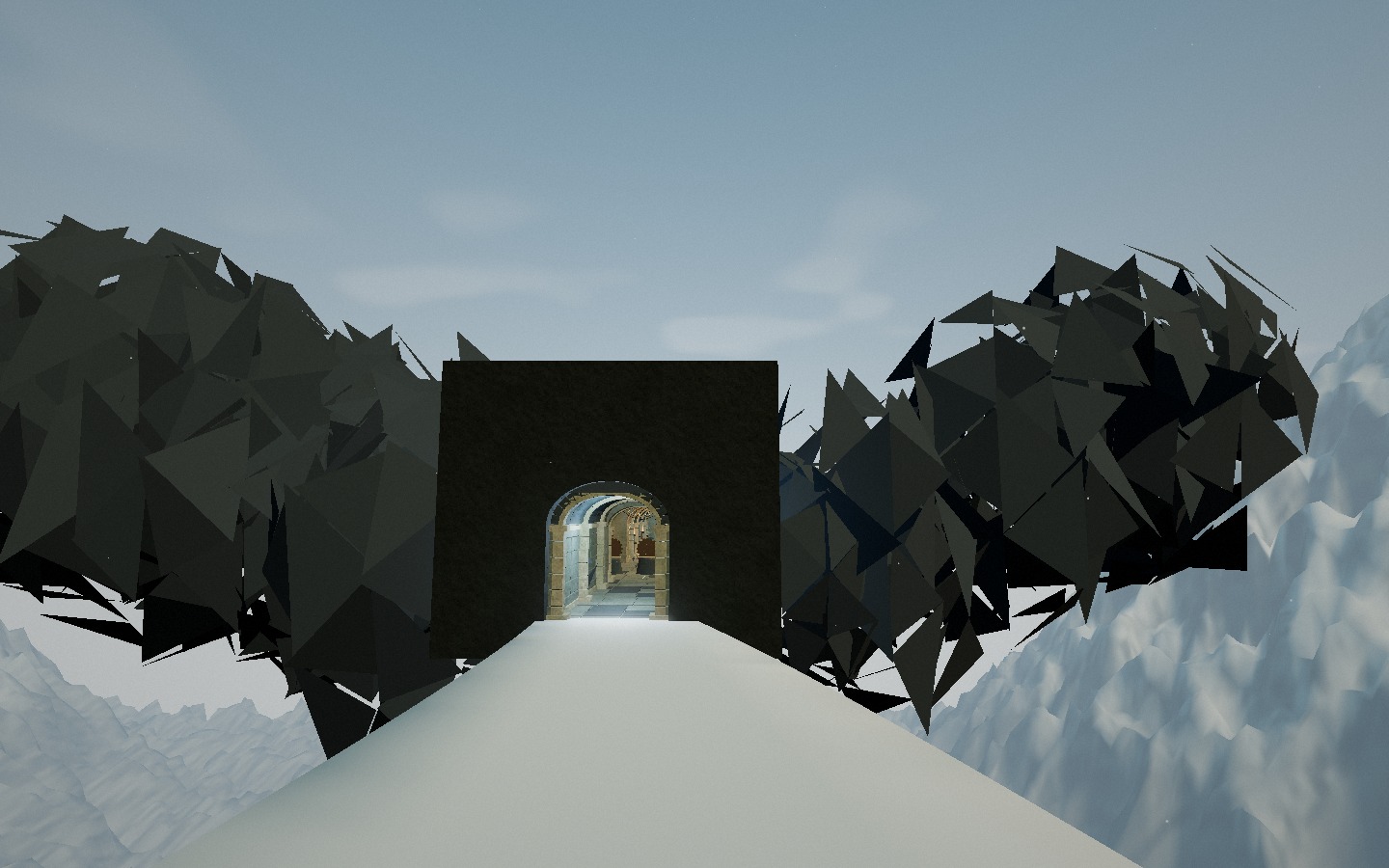
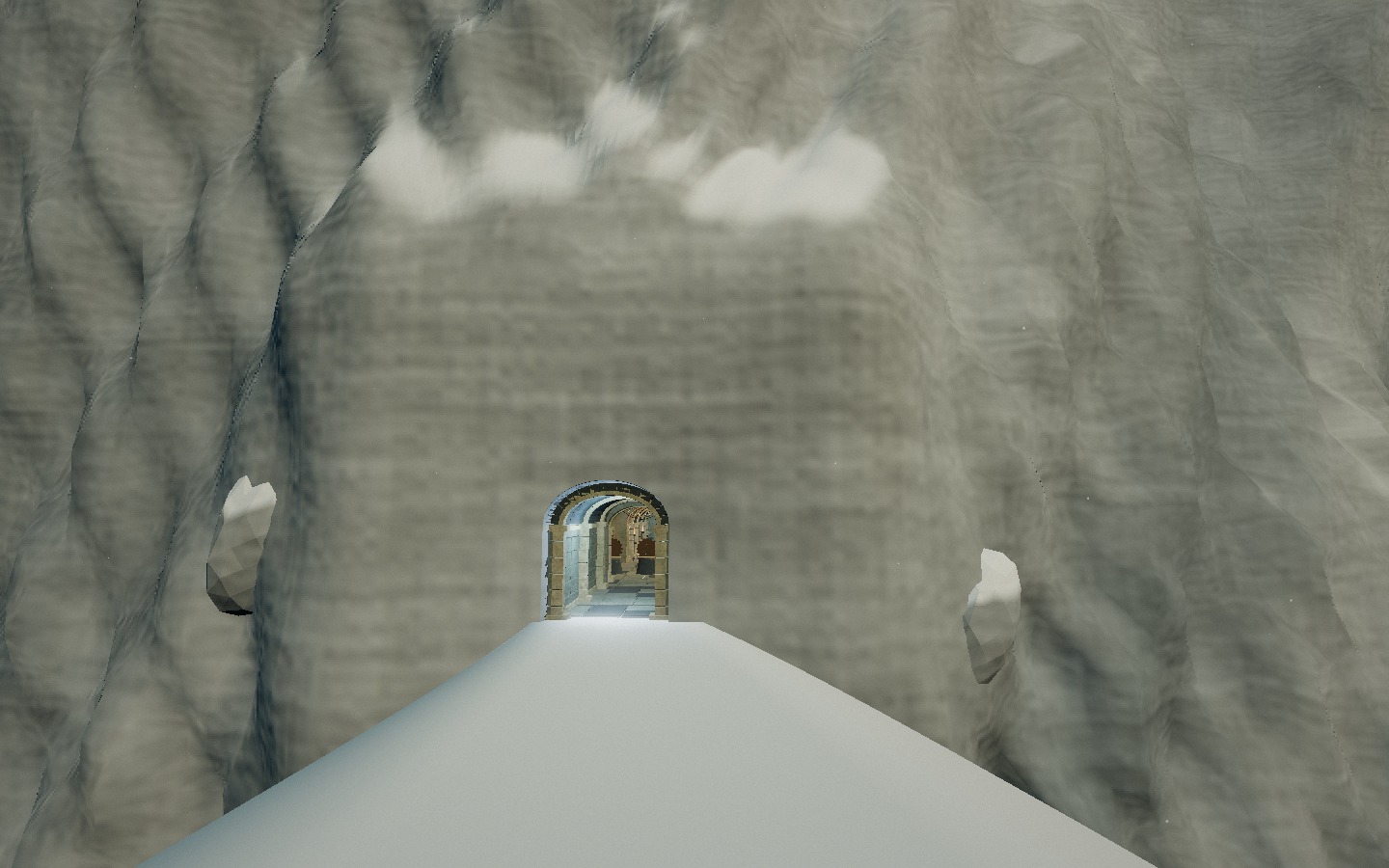
A mesh landscape with twelve authored peaks, a winding ridge and a rebuilt entrance that joins the rock.
Noise and seven additive peaks shape the heightfield. A CPU mirror supplies the walking height.
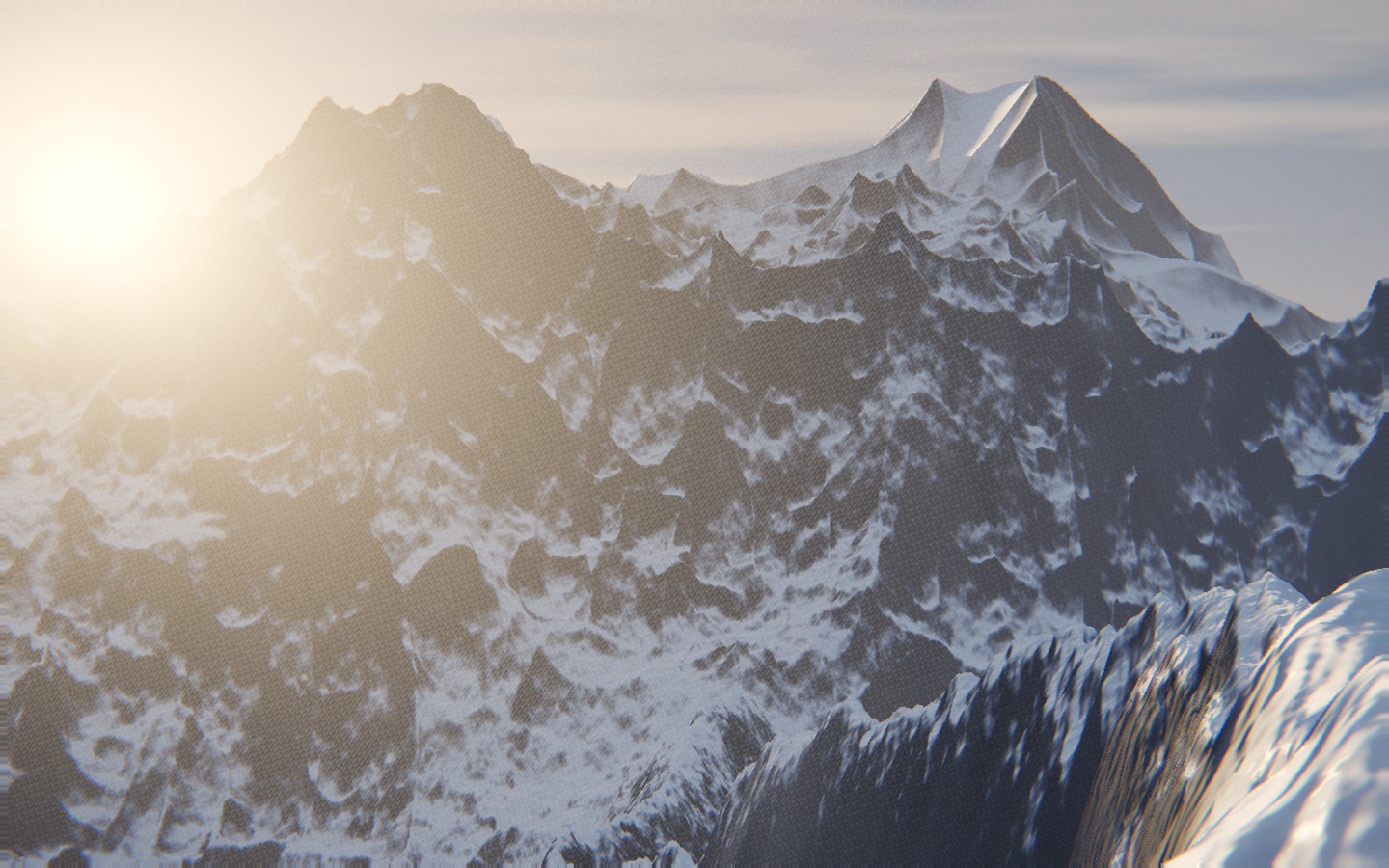
Layered mountain silhouettes, snow and haze in screen space. An authored reveal, not a walkable alpine terrain.
The lock
Three seals with three symbols each. A fixed solution is explained by an inscription.
Three floor rings with six positions each. The target is randomized; corridor panels teach the combination.
Three clue tablets record the required turns. The mechanism is a separate panel that can be left and revisited.
Sound construction
Oscillators, brown noise and a generated convolution reverb. Stereo-panned drips; no recordings.
HRTF positional sources follow the player. Drips share shader timing; outside, the reverb opens into a D-major reveal.
Low drones, filtered noise, stereo-panned drips and synthesized chimes. Chapter transitions crossfade the soundscape.
Performance strategy
Rasterization plus reflection and post-processing. Adaptive resolution can step down under load.
Raymarch budgets and noise detail vary with distance. Render resolution can fall and recover, with tighter mobile limits.
A fixed 108-step crypt march and a device-pixel-ratio cap of 1.4. No measured adaptive-resolution loop.
Actual renderer captures · contains location spoilers
The same beats, different spaces.
These frames come from the existing Astra/Opus assessment. They are selected viewpoints, not matched camera positions or evidence of frame rate. Sol is playable above; it does not yet have a matching captured scene set.
01 / The awakening
Astra builds a symmetrical, firelit burial hall. Opus puts a torch in your hand and lets the darkness close around the flooded vaults.
ChatGPT 6 Astra · The Still BelowOpus 5 · Coldlight
02 / Learn the mechanism
Astra’s three seals are a compact symbolic lock. Opus distributes its randomized combination through the corridor before the player reaches the floor rings.
ChatGPT 6 Astra · The Still BelowOpus 5 · Coldlight
03 / A world above
Astra’s rebuilt polygon terrain and Opus’s raymarched heightfield both trade enclosure for distance. Similar dramatic purpose; very different geometry and lighting pipelines.
ChatGPT 6 Astra · The Still BelowOpus 5 · Coldlight
The initial version behaved more like a point-and-click page. The first correction asked for walking and looking around; the next caught movement that did not align with the camera. The current build has free camera movement in the crypt and corridor, while other chapters remain staged.
02 / Sol · puzzle contract
A riddle needs a way in—and a way back out.
The mechanism appeared before its answer had been taught and could trap the player in its panel. The correction added a discoverable clue trail and a return to the corridor. Tablets, remembered clues and an escapable panel now exist in the source. This is a usability revision, not just visual polish.
03 / Astra · connected geometry
A doorway has to belong to the mountain.
The exterior follow-up rebuilt the entrance around its opening and widened the ridge into the surrounding terrain. More mesh detail matters where the player can walk up to a join; shader snow alone cannot repair the silhouette or close a gap.
04 / Opus · one world, two representations
The renderer and the feet must agree.
A shader can display an enormous procedural world without a conventional mesh. It cannot, by itself, tell the CPU where the player can stand. Coldlight mirrors its distance-field collision and exterior height calculations for navigation. Geometry changes have to preserve that agreement.
Astra’s entrance revision: before / after
Earlier entrance geometryRebuilt entrance · September 6
Captured in the original assessment’s exterior follow-up. This revision is included in the Astra snapshot above.
Process record
What we actually asked for.
Read the original prompt, verbatim
can we create a new project, purely webgl based, no external assets, where the protagonast wakes up in spooky ancient crypts, dim lighting, water dripping, mystery horror feel, then has to make his way to some seemingly really ancient corridors to finally find an exit, maybe requiring a small combination of some machinery/ancient mechanics/magic mix, to reveal an exit and when he steps out, he is out on a majestic snowy mountain ridge, in the middle of high epic mountain ranges. this should all be a stunning and astoundingly impressive audiovisual experience.
Read Sol’s two substantive refinement prompts
can,t we have a more free way to navigate and walk around? only forward with w and not even look around is no way to explore ancient corridors?
the wasd controls are not aligned with the camera direction. and that riddle in the hall, that just pops up, cannot be exited, and how should the player know what to enter there when not reading/finding anything about it yet/earlier?
A few settings and mouse-inversion defaults changed afterward. The subsequent refinement time was not equal across projects.
What this record can—and cannot—claim
Technical notes are grounded in the game sources and the existing “From Crypt to Ridge” assessment. The captures are selected scenes; they do not establish a complete playthrough, mobile compatibility or comparative frame rate. No numeric winner is assigned.
Local game snapshots imported 2026-09-06. Astra and Sol retain their original client game logic, bundled for static hosting; Opus retains its original local modules. No game art, recorded soundtrack or remote runtime dependency is added by this integration.
 ▶ Play The Still Below