Bifteki Taxi radioMEZE RUN

Experiment 013 · interactive comparison

A room above Paris.

Recreate Gustave Eiffel’s apartment at the top of the tower. Then make the rooms, the ironwork and a whole city hold together when someone starts exploring.

The furnished salon in Astra’s Eiffel apartment reconstruction.▶ Explore · GPT 6 Astra

GPT 6 Astra

Eiffel’s private pavilion

An explorable apartment with an archival floor plan, a live mini-map and a flight around the whole tower. The latest pass rebuilds the laboratory instruments and corrects furniture supports and room openings. Its source drawer separates evidence from interpretation.

Shared spatial plan · Three.js · local reflection passes
Controls & sound

Drag to look; WASD or arrow keys to walk. Room links jump between locations. “See the whole tower” starts an optional flight; Escape returns to exploration. Sound is opt-in.

Use “Stop & return to comparison” above the scene to unload the experience and its audio.
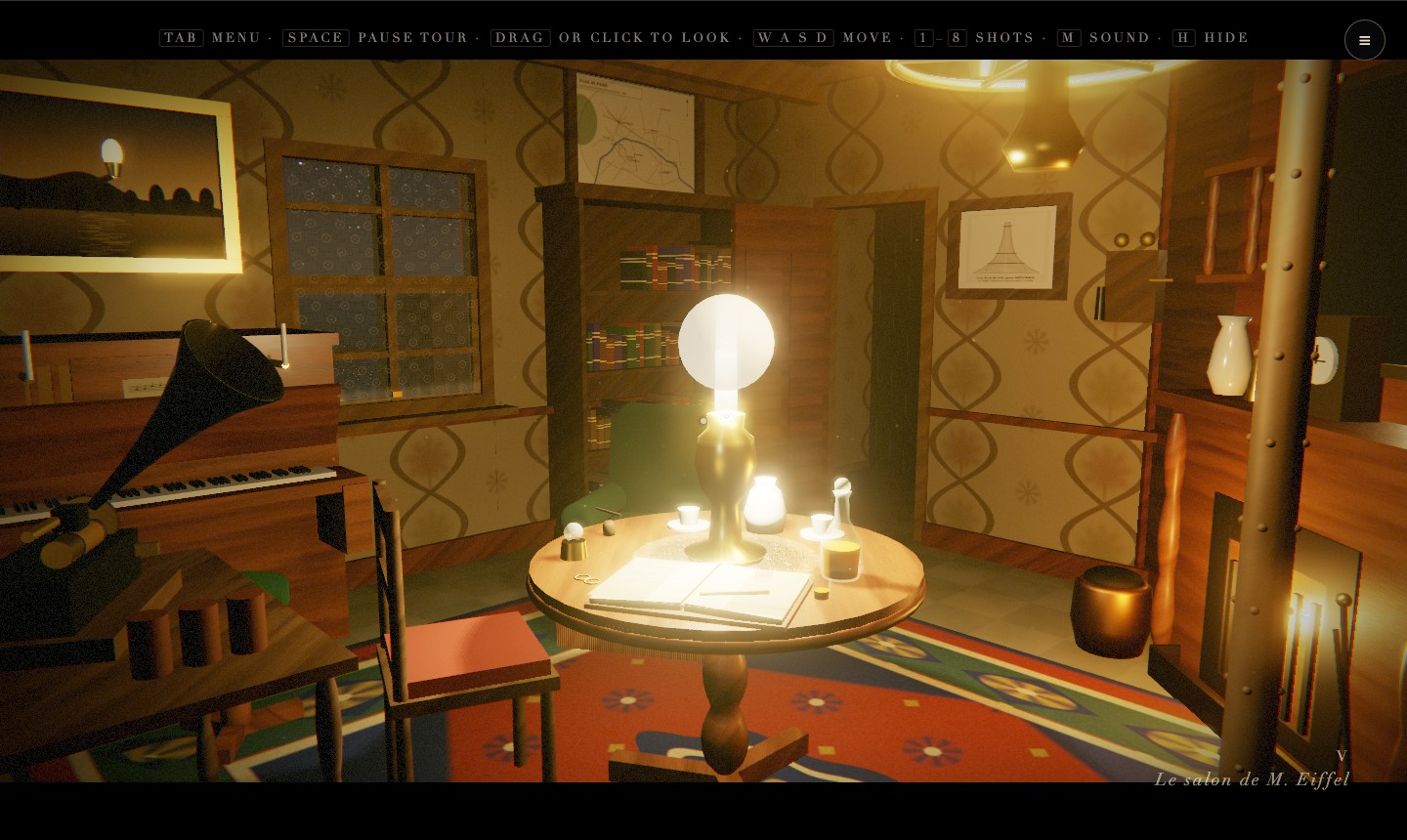
The warmly lit salon in Fable 5.1’s Chez Eiffel.▶ Explore · Fable 5.1

Fable 5.1

Chez Eiffel

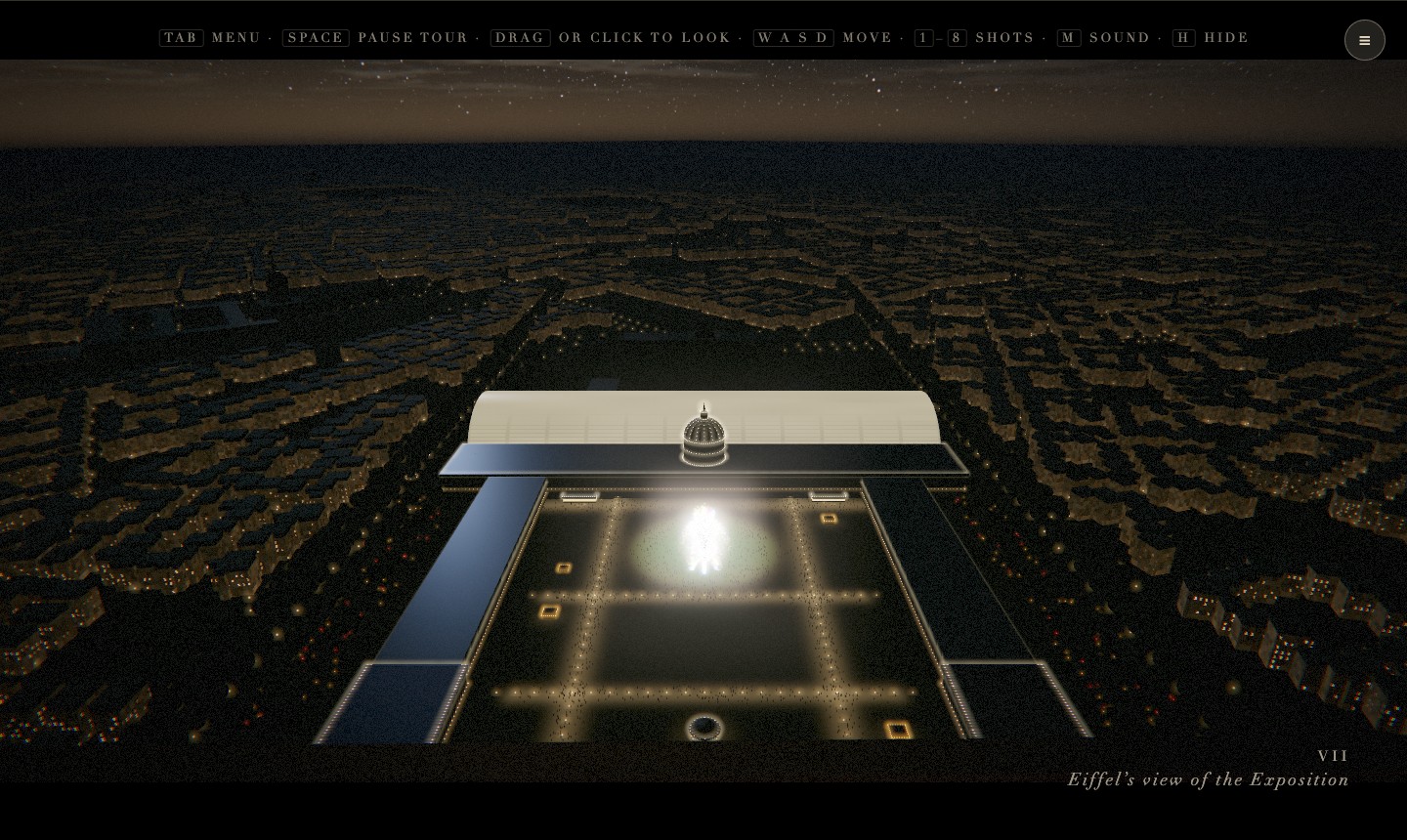
An eight-shot night tour from Paris into the furnished pavilion. Below the windows: strolling crowds, paper lanterns, lit cafés and coloured fountains. Leave the camera track to walk inside or fly freely.

Instanced Paris · logarithmic depth · adaptive post-processing
Controls & sound

Enter the scene, then Tab opens the menu. Choose Tour, Free flight or Walk inside. WASD moves; drag looks. Space pauses the tour, 1–8 select shots, and M toggles sound. Escape releases captured mouse input.

Use “Stop & return to comparison” above the scene to unload the experience and its audio.
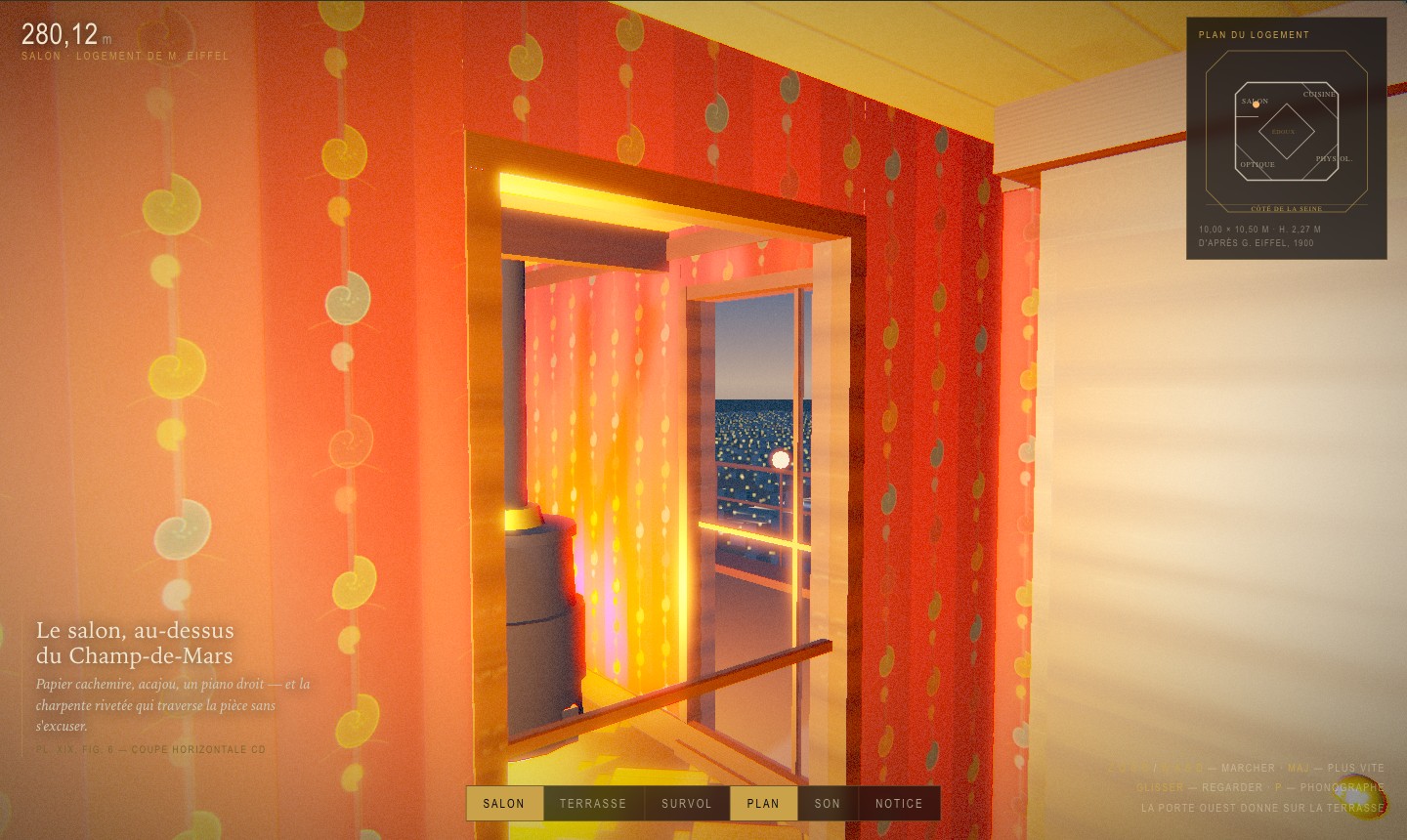
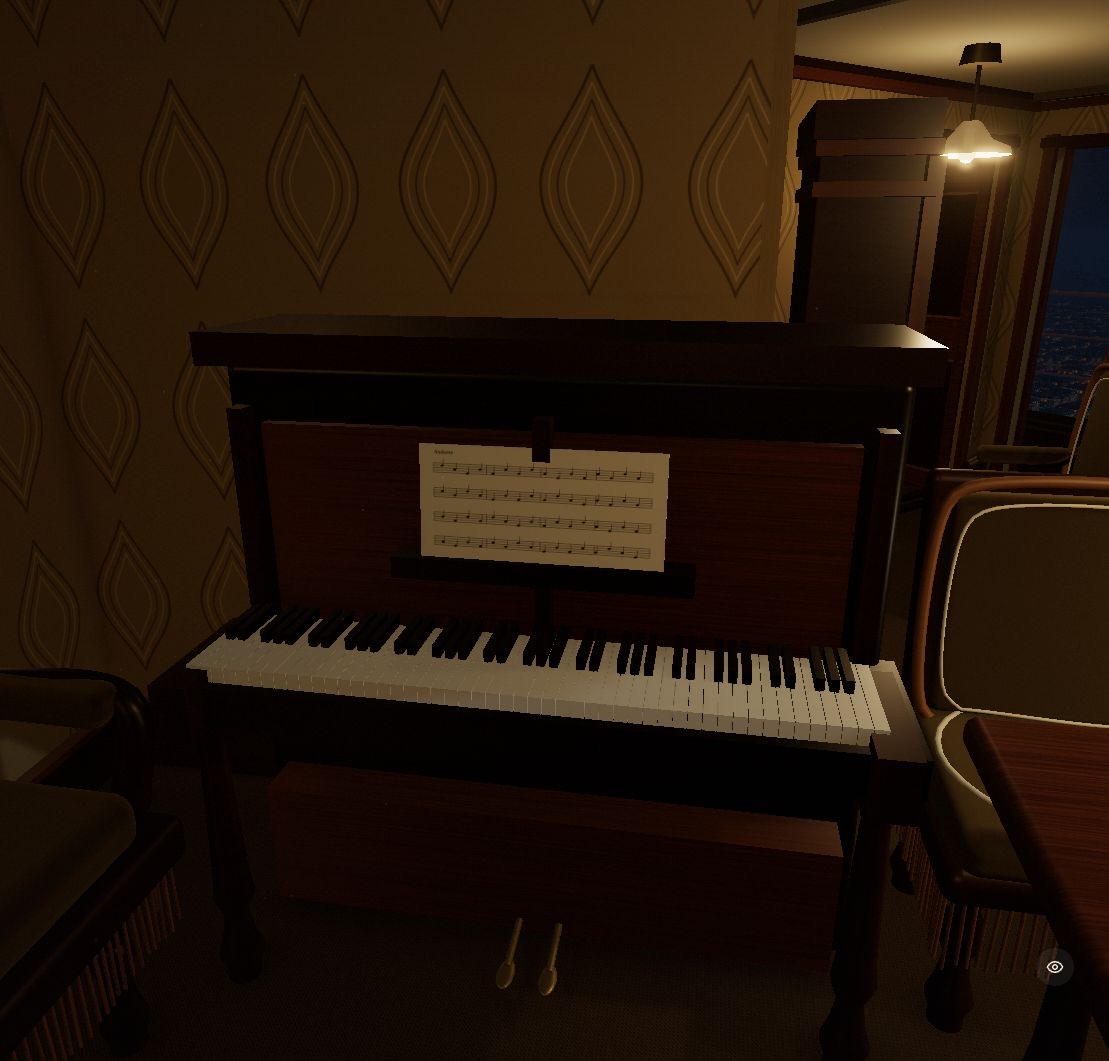
Patterned walls and a window overlooking Paris in Opus 5’s summit salon.▶ Explore · Opus 5

Opus 5

Le Logement de Monsieur Eiffel

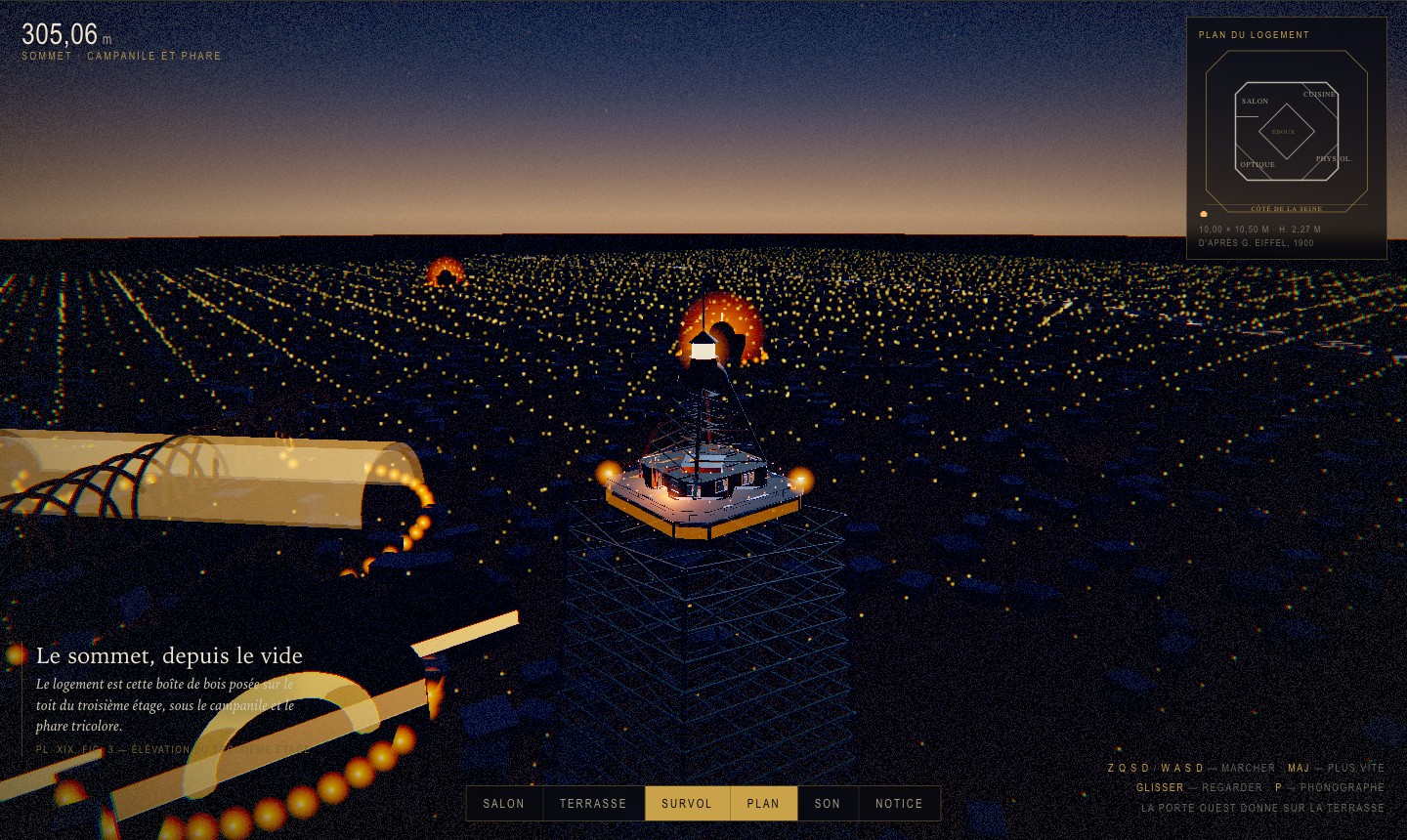
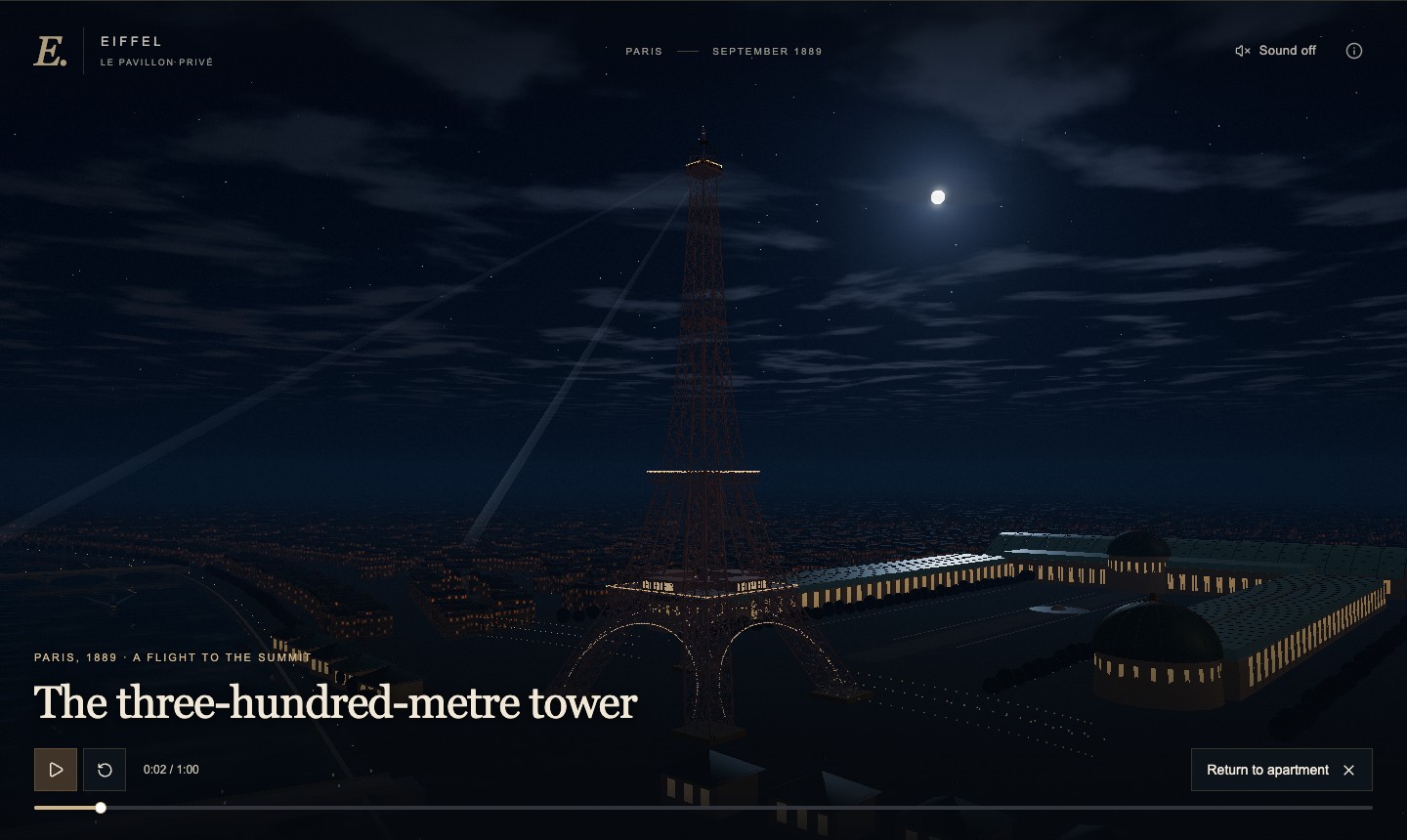
A salon, a terrace and a city flyover, with a floor-plan overlay and an illustrated historical notice. The apartment and the distant city are rendered as separate depth ranges.

Near/far render passes · procedural materials · Web Audio
Controls & sound

“Monter” enters the scene. Salon, Terrasse and Survol change the view. Click-drag to look; WASD or arrow keys move. Plan toggles the map, Son toggles audio, and Notice opens the source notes.

Use “Stop & return to comparison” above the scene to unload the experience and its audio.
Implementation notes

A carpet, a tower, a horizon. One browser.

The hard part is not just furnishing a room. It is preserving detail at arm’s length while an enormous city remains visible through the window.

Source-level observations · not comparative performance measurements
SystemGPT 6 AstraFable 5.1Opus 5
Spatial structureOne shared plan supplies room geometry, furniture footprints, navigation and the mini-map.A procedural pavilion sits inside a tower and city. Tour, flight and indoor walking share that world.Separate near and far scenes keep the apartment and distant city in different depth ranges.
Light and surfaceLocal reflections, shadow maps, ambient occlusion and a mix of procedural detail and local carpet/wallpaper textures.Shader-built wallpaper, wood, velvet and brass; gas-light halos, bloom, fog and an adaptive quality ladder.Procedural surface detail and a post-processing pass combine the near/far scene renders. Resolution can drop under load.
A city at room scaleBatched geometry and an optional full-tower flight connect the pavilion to its surroundings.Instanced city blocks and strolling crowds, shader-driven lanterns and additive fountain mist. Logarithmic depth spans furniture to distant Paris.Render the city, clear depth, then render the nearby scene: distance does not consume the apartment’s depth precision.
SoundAn opt-in synthesized soundscape. Walking and the archival source drawer work without enabling audio.Generated spatial audio: wind, iron, city ambience, clock and a filtered, wavering phonograph.Generated Web Audio, started on entry, with a visible Son toggle and sound changes between viewing modes.

Challenge notes

The plan had to agree with the room.

← Back to Notes
01 / Astra · one spatial contract

Draw it once. Walk through it everywhere.

The floor plan is not a decorative overlay. The same spatial data feeds the scene, furniture footprints and navigation, so the map and the player’s feet have a common source of truth. That is a useful architectural answer to a deceptively visual task.

02 / Fable · a living city

The view needed a pulse, not another skyline.

The Exposition now has strolling crowds and drifting paper lanterns, animated in shaders rather than by moving thousands of objects on the CPU. Fountain mist and soft pools of gas light make the grounds read from the pavilion. The batching pass deliberately leaves animated glow surfaces alone: merging everything would freeze part of the show.

03 / Opus · depth precision

Paris should not eat the furniture’s precision.

A city-scale view and nearby objects ask very different things of a depth buffer. Opus renders its distant and nearby scenes separately, clearing depth between them before post-processing the result. It is a small rendering decision with room-scale consequences.

04 / All three · reconstruction

A plausible room still needs an honest footnote.

A plan can establish a layout without settling the wallpaper, every object or the view beyond a window. These builds include reference material and interpretive choices. Keep both visible: atmosphere invites exploration; provenance tells us what we actually know.

Actual browser captures

Then step outside.

Selected views from each running build, not matched camera positions or frame-rate evidence. Open a frame for the full view, or launch the scene above to take your own route.

A view of the Eiffel Tower from Astra’s optional flight.
GPT 6 Astra · exterior view
The illuminated Exposition grounds seen from Eiffel’s pavilion in Fable 5.1’s night tour.
Fable 5.1 · exterior view
The tower and city in Opus 5’s Survol view.
Opus 5 · exterior view

Evidence & scope

Explore the interpretation. Inspect the choices.

Astra includes an archival source drawer and a preserved earlier prototype. Fable’s original reconstruction and technical notes are available alongside the build. Opus exposes its reference notes through Notice. Those records belong to their respective reconstructions; this comparison does not independently certify them.

Desktop is the intended comparison view. These are demanding WebGL scenes; the integration checks cover startup, selected navigation and return controls, not complete tours or broad device certification.

Imported 2026-09-08. Original project folders are untouched. Three.js and required runtime libraries are bundled locally; the Opus import uses its existing fallback fonts in place of remote font requests. No generated promotional artwork stands in for a game capture.

Snapshot source and output fingerprints ↗