Bifteki Taxi radioMEZE RUN

Experiment 014 · from reference to real time

Into the dust.

A small ship. An impossible hull. A signal worth following.
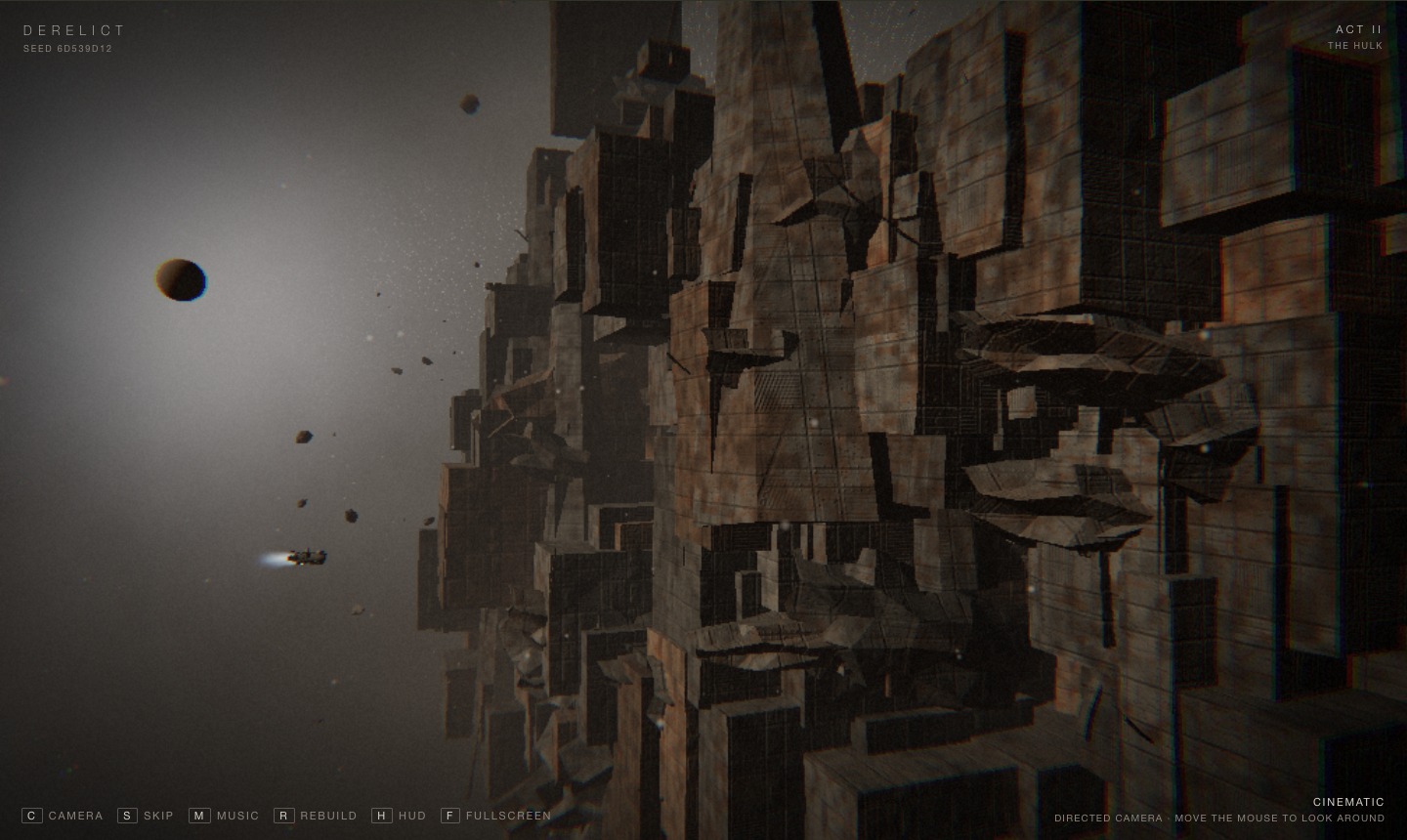
We started with a Grok Imagine image, explored several implementations, and stayed with Fable 5.1 as the scene became DERELICT.

DERELICT running in the browser: a small salvage tug beside the fragmented, plated hull in dusty space.▶ Enter DERELICT

The version we stayed with

DERELICT

Fable 5.1 · actual browser capture

A salvage tug follows a lost ship’s beacon into the dust. The diorama became an interactive short: arrival, approach, investigation, then something changes. About 3½ minutes, followed by free camera exploration.

Instanced geometry · triplanar plating · cue-driven score

Controls & sound

Enter starts the film. C cycles cinematic, orbit and chase cameras; S skips to the next act. M or Space toggles music. R rebuilds the hull with a new seed. Touch controls provide camera, skip and music buttons.

The site’s “Stop & return” link unloads the scene and its audio.
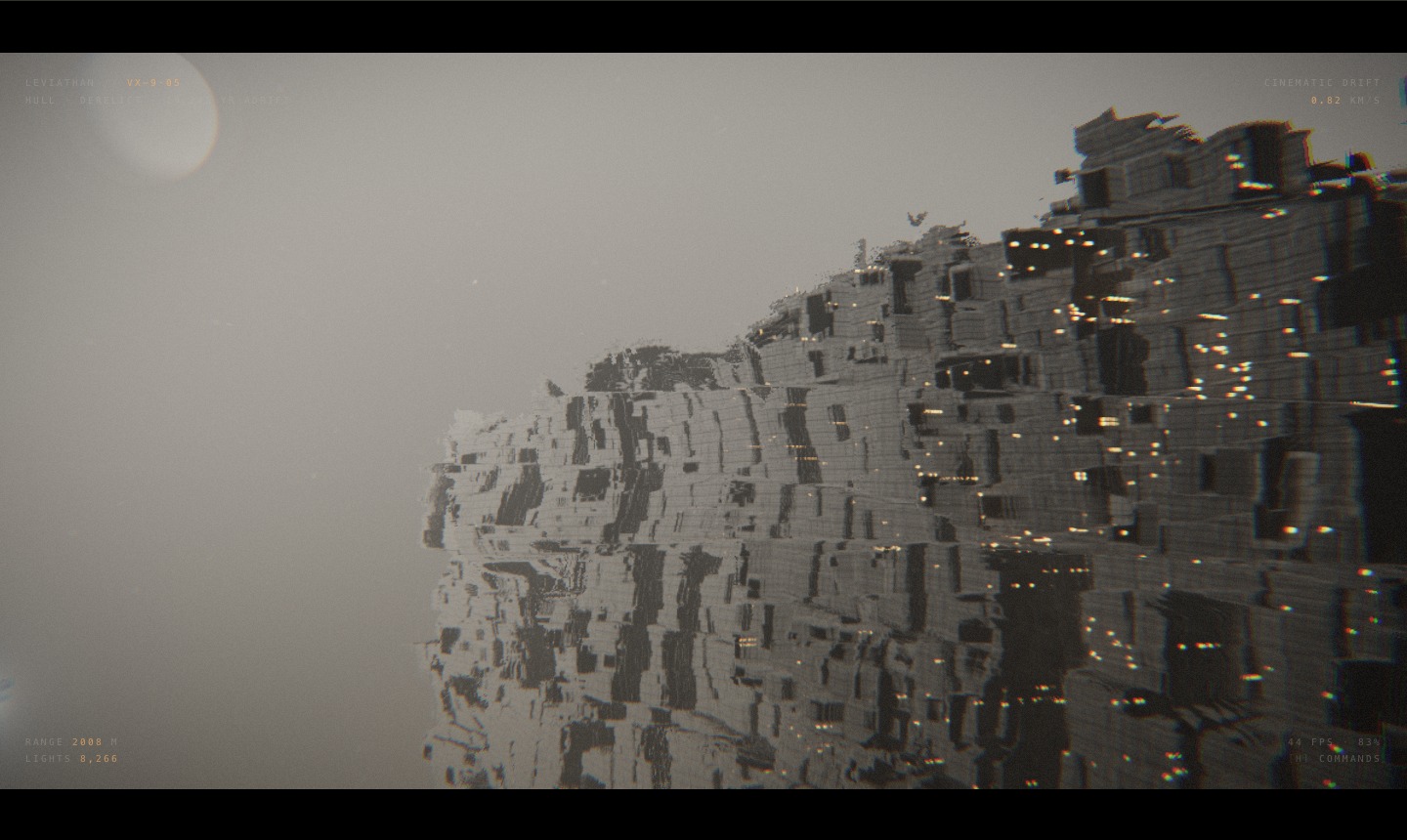
LEVIATHAN running in the browser: layers of eroded hull plating and tiny lights recede into grey fog.▶ Explore · Opus 5

An alternate rendering approach

LEVIATHAN

Opus 5 · actual browser capture

A continuous drift beside a vast, eroded hull. Here the structure is a signed-distance field, not a pile of meshes. Leave the camera rail and inspect how layers of plating, recesses and fog hold up in motion.

Raw WebGL · raymarched hull · temporal reprojection

Controls & sound

Click to enter. Drag to look; WASD flies freely. Space/Shift ascends/descends, Q/E rolls. C resumes cinematic drift, M mutes, 1–4 selects quality, and H opens the commands.

The site’s “Stop & return” link unloads the scene and its audio.
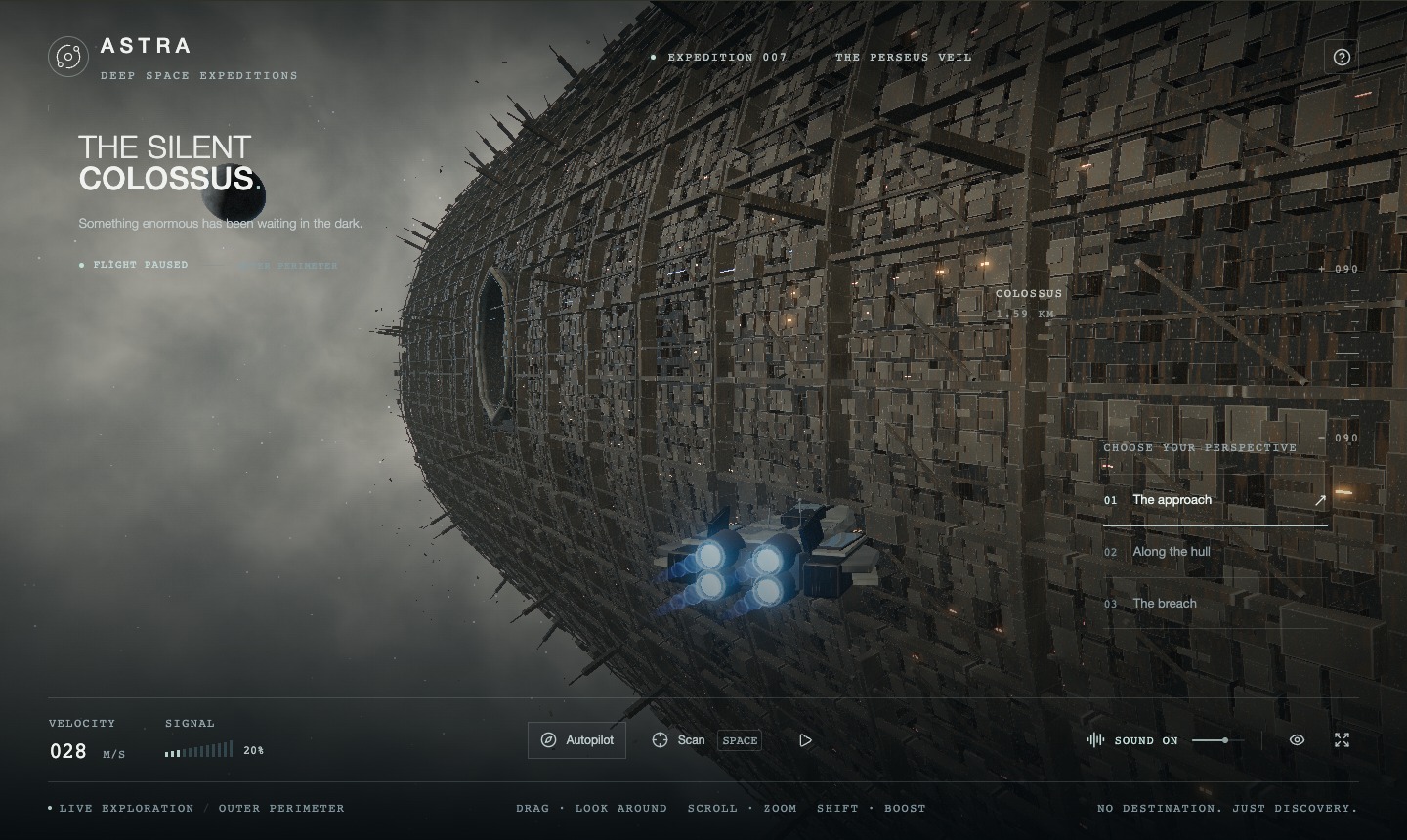
The Silent Colossus running in the browser: a blue-thrust ship approaches a massive plated structure, with flight instruments visible.▶ Explore · GPT 6 Astra

An alternate flight experience

The Silent Colossus

GPT 6 Astra · actual browser capture

A survey flight with three viewpoints, manual piloting and a scanner. The hull is assembled from instanced geometry; a simulation timeline coordinates scan reports, signals and electrical discharges.

Three.js · instanced hull · scan/event timeline

Controls & sound

Begin approach starts the flight. Drag to look, scroll to adjust camera distance, WASD for manual flight, Q/E down/up and Shift to boost. Space scans, C changes viewpoint, M toggles sound and P pauses.

The site’s “Stop & return” link unloads the scene and its audio.
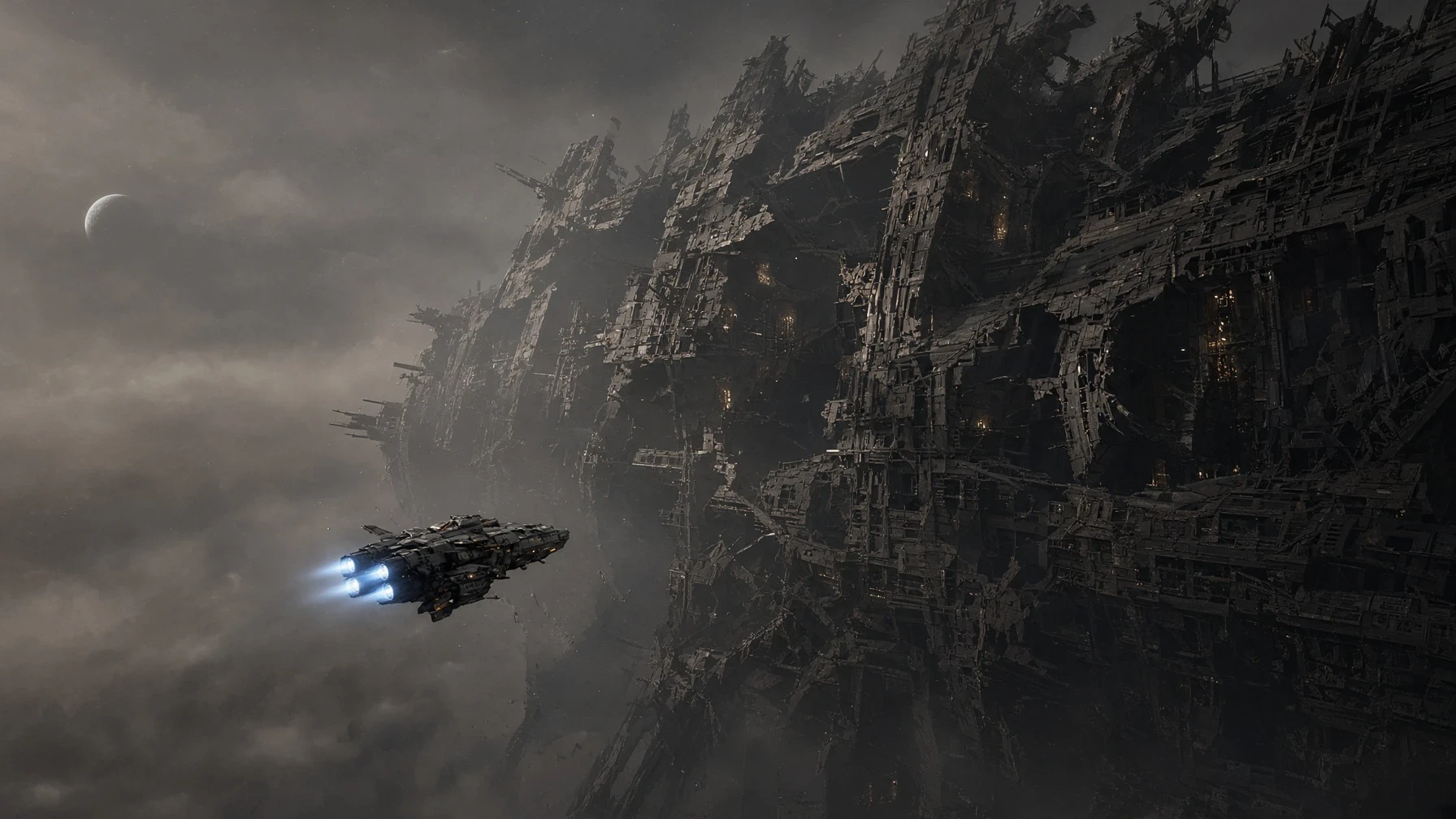
Grok Imagine · supplied reference image

The image gave us scale. The browser needed everything else.

The tiny ship against a wall of dark machinery established the composition and mood. Motion, navigation, readable surfaces and sound had to turn that single viewpoint into an experience.

Grok Imagine reference: a small ship with blue engines beside an immense dark hull in drifting dust.
Generated visual reference—not a screenshot from any of the three implementations.

Implementation notes

Similar silhouettes. Very different machinery.

Source-level observations · no normalized performance comparison
SystemFable 5.1Opus 5GPT 6 Astra
The hullInstanced eroded blocks, buttresses, cables and rubble. Procedural plating is projected across surfaces with triplanar mapping.A raymarched distance field: stacked plate grids, recessed cells, box-shaped towers and sparse erosion.Instanced hull pieces, service details and weathered-metal materials, with a scan effect passed into the surface shaders.
The atmosphereSky-dome murk, drifting cloud banks, dust and a fog reveal controlled by the director.Directional fog scattering, distance-ramped density and occluded in-scattering keep deep recesses dark.Exponential scene fog, a shader sky, stars and dust, with an environment reflection map.
Time and soundNamed film cues coordinate ship movement, text, light and a synthesized score. The ending hands the cameras back to the viewer.A generative harmonic cloud, drone, wind and metal resonances. Distance to the hull changes the mix.Scan reports, signals and discharges share simulation time; the synthesized soundscape accompanies the flight.
Rendering budgetInstancing and reduced hull density on touch devices, capped resolution, bloom and finishing passes.An absolute raymarched-pixel budget, distance-based detail and reprojected temporal history.Instancing, capped pixel ratio and resolution reduction after sustained rendering pressure.

Challenge notes

A huge object is not yet a sense of scale.

← Back to Notes
01 / Fable · direction

Make the viewer wait for the silhouette.

DERELICT coordinates the approach, thinning dust, camera movement and score through a director timeline. The ship gives the eye a familiar scale; the reveal supplies the distance. It is as much an editing problem as a geometry problem.

02 / Fable · surface

Plating has to survive leaving the postcard view.

The hulk uses a procedural plating texture with seams, rivets, scratches and a height channel. Triplanar projection carries that detail across differently oriented fragments; weathering and roughness stop every block from catching the same clean highlight.

03 / Opus · motion

Remember the surface, not yesterday’s pixel.

Accumulating frames can recover detail from an expensive raymarch. But blending history at the same screen coordinate smears a moving hull. Opus reconstructs world positions from depth and reprojects them into the previous frame before sampling history.

04 / Astra · event timing

A scanner should share the flight’s clock.

Astra’s scan completion, signal messages and electrical events live on a simulation timeline. That gives the instrument panel and the world a common clock, instead of letting independent timers drift apart when the flight pauses.